What Is the Cosmic Web? | Bedtime Astronaut For Sleep
As you find yourself gently settling into a moment of peace, imagine the vastness of space enveloping you in its quiet embrace. Here, in this serene expanse, we explore the wonders of our universe with a gentle curiosity that invites tranquility. The cosmic web, a grand tapestry of the universe, awaits our exploration. It is a concept that may seem abstract at first, yet as we unravel its mysteries, we discover the intricate beauty woven into the fabric of the cosmos itself.
Imagine the night sky, a vast dome filled with countless stars, each a distant sun, twinkling softly against the velvet backdrop. These stars, millions of them, form galaxies, those great islands of light and matter floating in the universe. When we look up, we see only a fraction of these galaxies, each one bustling with its own stars, planets, and mysteries. To begin to understand the cosmic web, we first consider these galaxies, for they are the building blocks of this immense structure.
In the early universe, shortly after the Big Bang, there existed a hot, dense state that gradually expanded and cooled, leading to the formation of the cosmic microwave background. This faint glow, a whisper from the dawn of time, fills the universe and provides a snapshot of its infancy. As the universe expanded, tiny fluctuations in this primordial soup of particles became seeds of structure, leading to the formation of galaxies and galaxy clusters. Gravity, the gentle sculptor of the cosmos, drew matter together, forming the stars and galaxies we see today.
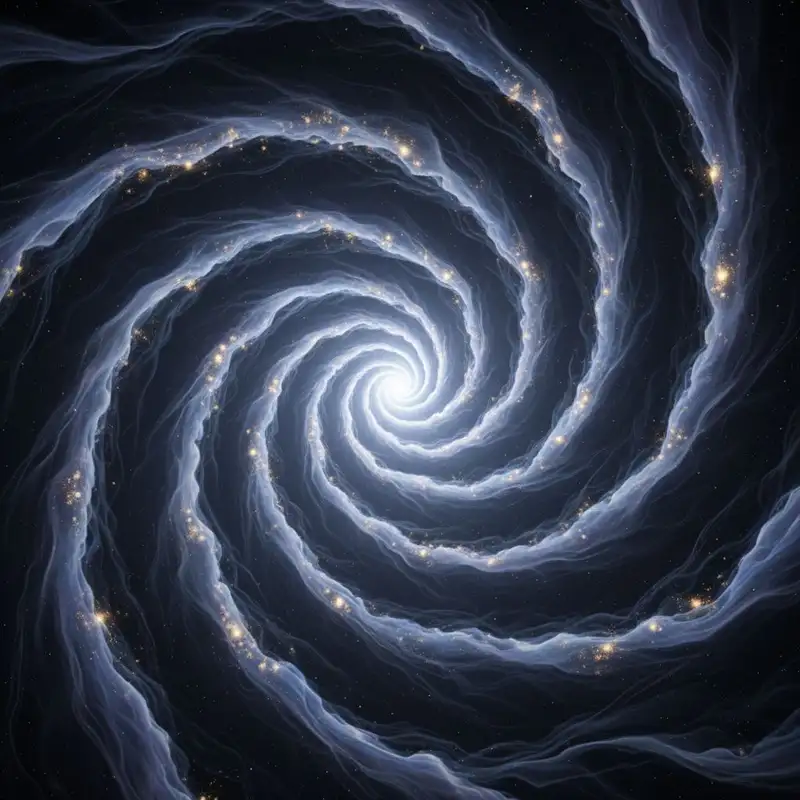
Now, if we imagine peering deep into the universe, beyond the reach of our eyes, we find that galaxies are not randomly scattered but arranged in a pattern, like beads on an invisible thread. This grand arrangement is what scientists refer to as the cosmic web. It is a vast network of filaments, composed primarily of dark matter, which forms the scaffolding of the universe. These filaments connect clusters of galaxies, creating a structure that resembles a spider’s web on the grandest of scales.
Dark matter, elusive and mysterious, plays a central role in the formation of the cosmic web. Though we cannot see it directly, we perceive its presence through its gravitational effects on visible matter. It is thought to make up a significant portion of the universe's mass, acting as an invisible framework upon which galaxies and galaxy clusters are built. As dark matter draws together under the influence of gravity, it forms the threads of the cosmic web, guiding the distribution of ordinary matter.
Visualize, if you will, these filaments stretching across the universe, vast and interconnected, forming a network that spans billions of light-years. Each filament is a bridge between galaxies, a channel through which matter flows. The spaces between these filaments, known as voids, are immense regions where few galaxies reside, emphasizing the intricate pattern of the web. It is within these filaments that galaxies congregate, forming clusters and superclusters, the densest nodes of this cosmic network.
The study of the cosmic web is a journey into the very architecture of the universe. By observing the distribution of galaxies and their motion, astronomers can infer the presence and structure of the underlying dark matter. Advanced instruments, both on Earth and in space, allow us to peer deeper into the universe than ever before, mapping the cosmic web with increasing precision. As our understanding grows, so too does our appreciation for the complexity and harmony that governs the cosmos.
The cosmic web is not static; it evolves over time as the universe continues to expand. Galaxies drift along the filaments, drawn by the gravitational pull of massive structures, merging and interacting in a cosmic dance that has been ongoing for billions of years. This dynamic nature of the cosmic web reflects the ever-changing universe, a place of constant motion and transformation.
As we ponder the cosmic web, we find ourselves contemplating the scale of the universe and our place within it. This grand structure, though vast beyond comprehension, is a testament to the unity and interconnectedness of all things. It reminds us that even in the vastness of space, there is order and connection, a harmony that binds the cosmos together.
In this quiet moment, as we reflect on the cosmic web, we are reminded of the beauty and wonder that the universe holds. It is a reminder that even in the stillness, there is much to discover, much to understand, and much to appreciate. As we continue our exploration, we find that the universe, in all its vastness, invites us to look deeper, to see not just with our eyes, but with our minds and hearts.
The cosmic web, with its delicate filaments and sprawling voids, serves as a gentle reminder of the universe's grandeur and complexity. It invites us to consider the forces that shape our universe, the invisible threads that connect us all. As we journey through this exploration of space and science, we are enveloped in a sense of wonder that is both humbling and inspiring.
In the quiet of this moment, let us continue to explore the universe with curiosity and an open heart, for there is always more to discover. The cosmic web, in its silent majesty, awaits our attention, whispering the secrets of the cosmos to those willing to listen.
In this vast tapestry of the universe, the cosmic web stands as a silent witness to the passage of time, a testament to the forces that have shaped the cosmos over billions of years. It's a structure that invites us to consider the profound interplay between gravity and matter, a dance choreographed by the fundamental laws of physics. As we peer deeper into this intricate network, we find ourselves tracing the paths of ancient photons, those ghostly messengers that have traveled across the universe to reach us. They carry with them stories of distant galaxies, each one a glowing node in this cosmic web, and each a beacon of light that has traversed the dark expanse of space.
The cosmic web's filaments stretch across the universe like strands of a spider's silk, delicate yet resilient, weaving together the fabric of spacetime itself. Within these filaments, galaxies form and cluster, drawn together by the inexorable pull of gravity. This cosmic ballet is not confined to the visible universe; it extends into realms populated by dark matter, that mysterious and unseen substance that outweighs the ordinary matter we know by a factor of five. Dark matter does not interact with light in the way ordinary matter does, making it invisible to our telescopes. Yet, its presence is undeniable, inferred from the gravitational forces it exerts on galaxies and galaxy clusters, helping to bind the universe together.
As we delve deeper into the cosmic web, we can imagine the early universe, a time when matter first began to clump together under the influence of gravity. In those early epochs, the universe was a hot, dense soup of particles, its energy too great for atoms to form. As it expanded and cooled, matter began to condense into the first stars and galaxies, marking the dawn of cosmic structure. This era, known as the "cosmic dawn," was a time of profound transformation. The first stars ignited, their light cutting through the darkness, and their intense radiation began to ionize the surrounding hydrogen gas, gradually transforming the universe from opaque to transparent.
The emergence of the cosmic web is intricately linked to this transformative period. As primordial gas clouds collapsed to form stars and galaxies, they traced the contours of the underlying dark matter scaffolding. Over billions of years, these structures evolved, merging and growing to form the vast cosmic web we observe today. This process, known as hierarchical structure formation, is driven by gravity, which pulls matter together into increasingly larger structures. It's a process that continues to this day, as galaxies coalesce to form clusters and superclusters, the largest gravitationally bound structures in the universe.
One of the most fascinating aspects of the cosmic web is its dynamic nature. While it may appear static from our human perspective, the cosmic web is in constant motion, evolving over cosmic timescales. Galaxies drift along the filaments, drawn by the gravitational pull of nearby structures. This motion is a reflection of the expansion of the universe itself, a phenomenon first observed by Edwin Hubble in the early 20th century. The discovery that the universe is expanding was a watershed moment in our understanding of cosmology, revealing a universe that is dynamic and ever-changing.
The expansion of the universe stretches the fabric of spacetime, causing galaxies to move apart. Yet, within the cosmic web, gravity acts as a counterforce, pulling galaxies together and shaping their movement. This delicate balance between expansion and gravitational attraction is a defining feature of the cosmic web, giving rise to its intricate and beautiful patterns. It's a reminder of the interplay between the fundamental forces of nature, each exerting its influence on the grand scale of the cosmos.
Our understanding of the cosmic web is continually refined by observations from telescopes both on Earth and in space. These instruments, equipped with advanced detectors, allow astronomers to map the distribution of galaxies across the sky with unprecedented precision. Surveys such as the Sloan Digital Sky Survey have revealed the large-scale structure of the universe, uncovering the intricate network of filaments and voids that define the cosmic web. These observations provide critical insights into the nature of dark matter, the expansion of the universe, and the processes that govern galaxy formation and evolution.
As we look to the future, new observatories promise to deepen our understanding of the cosmic web. The James Webb Space Telescope, with its powerful infrared capabilities, will peer into the distant universe, observing the first galaxies that formed in the cosmic dawn. Meanwhile, ground-based projects like the Square Kilometre Array will map the universe in radio wavelengths, probing the distribution of hydrogen gas across cosmic time. These efforts will help to unravel the mysteries of the cosmic web, shedding light on the invisible forces that shape our universe.
In contemplating the cosmic web, we are reminded of the interconnectedness of all things. Each galaxy, each star, each planet is part of a larger whole, bound together by the invisible threads of gravity and dark matter. This cosmic interconnectedness mirrors the interconnectedness of life on Earth, where each organism, each ecosystem, is part of a delicate balance. The cosmic web invites us to reflect on our place in the universe, to consider the vastness of the cosmos and the smallness of our own existence.
Yet, even in our smallness, we are part of this grand tapestry, connected to the stars and galaxies by the same physical laws that govern the universe. It's a humbling thought, one that instills a sense of wonder and curiosity about the universe and our place within it. As we explore the cosmic web, we are reminded of the beauty and complexity of the universe, the intricate patterns and structures that emerge from the simple interplay of matter and forces.
The story of the cosmic web is still being written, with each new discovery adding to our understanding of the universe. It's a story that invites us to look beyond our immediate surroundings, to peer into the depths of space and time, and to listen to the quiet whispers of the cosmos. As we journey through this exploration, we are guided by a sense of wonder and curiosity, an openness to the unknown and a desire to learn more about the universe we inhabit.
In this moment of quiet reflection, let us pause to consider the beauty of the cosmic web, to marvel at its complexity and its elegance. Let us embrace the mysteries it holds, the secrets yet to be uncovered, and the questions that drive our exploration of the cosmos. For in this journey, we are not just observers of the universe, but participants in its unfolding story, woven into the very fabric of the cosmic web itself. As we continue our exploration, may we do so with open hearts and open minds, ready to embrace the wonders of the universe and the beauty of the cosmic web.
As we contemplate the vastness of the cosmic web, one cannot help but ponder the delicate balance that governs the universe's grand design. This intricate network, composed of dark matter filaments, serves as the scaffolding upon which galaxies are built, and yet, it remains largely invisible to our eyes. It is through the subtle dance of gravity that these cosmic strands reveal their presence, gently guiding the formation and distribution of galaxies. The cosmic web, a masterwork of cosmic architecture, is a testament to the interconnectedness of all things in the universe. It is a reminder that even in the vast emptiness of space, there exists a hidden order, a silent symphony of matter and energy that shapes the very fabric of reality.
The study of the cosmic web invites us to look beyond the visible, to explore the unseen forces that govern the universe. It is in these hidden realms that we find the enigmatic dark matter, an essential component of the cosmic web's structure. Though it does not emit light or energy detectable by current instruments, dark matter's gravitational influence is undeniable, affecting the motion of galaxies and the curvature of spacetime itself. It serves as the binding agent of the universe, holding together the cosmic web's delicate strands. Researchers continue to unravel the nature of dark matter, employing a variety of innovative methods to detect and understand this elusive substance. From underground laboratories shielded from cosmic rays to cutting-edge particle accelerators, the quest to comprehend dark matter is a journey filled with wonder and curiosity.
Beyond the dark matter that weaves through the cosmic web, there is another mysterious force at play—dark energy. This enigmatic presence, which constitutes a significant portion of the universe, is believed to be responsible for the accelerated expansion of the cosmos. As galaxies drift apart, propelled by this unseen force, the cosmic web stretches and evolves. Dark energy's influence is subtle yet profound, shaping the destiny of the universe on the grandest of scales. Its nature remains one of the greatest puzzles in modern cosmology, prompting scientists to seek answers through increasingly sophisticated observations and theoretical models. As we delve into the mysteries of dark energy, we are reminded of the boundless potential of human inquiry and the endless wonders that await discovery.
The interplay between dark matter and dark energy is a delicate balancing act, one that determines the large-scale structure of the universe. It is through this cosmic dance that galaxies are born, evolve, and ultimately, find their place within the vast tapestry of the cosmic web. The life cycle of galaxies is a captivating saga, marked by phases of formation, growth, and transformation. Galaxies begin their journey as primordial clouds of gas and dust, gradually coalescing under the influence of gravity. As they evolve, stars ignite within their cores, illuminating the darkness and bringing warmth to the cold expanses of space. Over billions of years, galaxies merge and interact, their shapes and structures constantly reshaped by gravitational forces. These celestial encounters can trigger bursts of star formation, enriching galaxies with new generations of stars.
In some regions of the cosmic web, galaxies cluster together, forming massive superclusters and vast sheets of matter. These dense regions are connected by the filaments of the cosmic web, creating a complex network that spans the universe. The Virgo Supercluster, for example, is home to our own Milky Way galaxy, along with thousands of others. This colossal structure is a testament to the power of gravity, which binds galaxies together across unimaginable distances. Within these cosmic gatherings, galaxies can undergo dramatic transformations, influenced by their interactions with neighboring galaxies. The intricate dance of gravity and motion within these clusters reveals much about the universe's underlying structure and the forces that shape it.
Yet, not all regions of the cosmic web are densely populated. There are vast voids, immense stretches of space where galaxies are sparse, and matter is thinly distributed. These cosmic voids, while seemingly empty, play a crucial role in the universe's large-scale structure. They provide a stark contrast to the dense filaments and clusters, highlighting the intricate balance between matter and emptiness. The study of these voids offers valuable insights into the dynamics of the cosmic web, helping scientists understand how galaxies and matter are distributed across the universe. As we explore these cosmic deserts, we gain a deeper appreciation for the complexity and diversity of the cosmos.
The cosmic web is not a static entity but a dynamic and ever-changing structure. Over billions of years, it has evolved from a nearly uniform expanse of primordial matter into the intricate network we observe today. The cosmic microwave background radiation, the afterglow of the Big Bang, provides a snapshot of the universe in its infancy, offering clues about the early stages of cosmic evolution. Through careful analysis of this faint relic, scientists have pieced together a timeline of the universe's development, tracing the growth of structures from tiny fluctuations in the primordial soup to the vast cosmic web we see now. This evolution is driven by the interplay of gravity, dark matter, and dark energy, each contributing to the complex tapestry of the cosmos.
As we gaze out into the universe, we are reminded of the profound beauty and majesty of the cosmic web. Its intricate patterns and delicate structures inspire awe and wonder, inviting us to explore the mysteries of the cosmos. Through the lens of powerful telescopes, we catch glimpses of this grandeur, peering into the depths of space and time. Each observation brings new revelations, deepening our understanding of the universe and its myriad wonders. The cosmic web is a testament to the power of nature to create order and complexity from chaos, a reminder of the interconnectedness of all things.
In our quest to understand the cosmic web, we are driven by a sense of curiosity and a desire to uncover the secrets of the universe. It is a journey that requires patience, perseverance, and an open mind, for the cosmos is vast and its mysteries are profound. As we explore the cosmic web, we are guided by the light of inquiry, a beacon that illuminates the path of discovery. Each question leads to new insights, each answer to new questions, as we journey deeper into the heart of the universe.
The exploration of the cosmic web is a collaborative endeavor, uniting scientists from around the world in a shared pursuit of knowledge. It is a testament to the power of human ingenuity and the spirit of collaboration, as researchers work together to unravel the mysteries of the cosmos. Through international partnerships and innovative technologies, we are able to peer deeper into the universe than ever before, uncovering the secrets that lie hidden within the cosmic web. This spirit of collaboration extends beyond the scientific community, inviting people from all walks of life to share in the wonder and beauty of the universe.
As we reflect on the cosmic web, we are reminded of our place within the universe and the interconnectedness of all things. The atoms that make up our bodies were forged in the hearts of stars, scattered across the cosmos by the explosive death of these celestial giants. We are made of star stuff, woven into the fabric of the universe, connected to the cosmic web in ways both profound and subtle. This connection inspires a sense of wonder and humility, inviting us to ponder the mysteries of existence and our role within the vastness of the cosmos.
The cosmic web is a reminder of the beauty and complexity of the universe, a testament to the wonders that await discovery. As we gaze into the depths of space, we are drawn into a journey of exploration and discovery, guided by the light of curiosity and the desire to understand the universe. It is a journey that invites us to look beyond the visible, to explore the unseen forces that shape the cosmos and to embrace the mysteries of the universe with open hearts and open minds.
In this journey, we are not alone. We are part of a community of seekers, united by a shared passion for discovery and a desire to unlock the secrets of the universe. Together, we are explorers of the cosmic web, charting a course through the vastness of space and time, guided by the light of knowledge and the spirit of inquiry. As we continue this exploration, we are reminded of the beauty and majesty of the universe, and the wonders that await discovery. May we journey forth with a sense of wonder and humility, embracing the mysteries of the cosmos and the beauty of the cosmic web.
The cosmic web, in its grandeur and complexity, extends beyond the mere arrangement of galaxies and dark matter. As we delve deeper into its architecture, we come to appreciate the subtle intricacies that define its structure and the delicate forces at play. One such aspect is the role of baryonic matter, the ordinary matter that makes up stars, planets, and indeed ourselves. Though it constitutes only a small fraction of the universe's total mass, baryonic matter lights up the cosmic web, providing the visible framework that outlines the invisible scaffolding shaped by dark matter. This luminous matter, gathered into stars and galaxies, forms along the dense filaments of the cosmic web, tracing the underlying distribution of dark matter with an elegance that mirrors the precision of a cosmic artist at work.
As we gaze outwards, our instruments capture the light from distant galaxies, allowing us to peer into the past, witnessing the universe in its earlier stages. The light from these galaxies has traveled vast distances, taking billions of years to reach us. This journey through time and space reveals the cosmic web in its nascent forms, where galaxies were closer together, and the universe was a more crowded and chaotic place. Over aeons, the gravitational pull of dark matter has shaped these galaxies, guiding them along the filaments of the web, where they grow and evolve. In this dance of creation and transformation, galaxies interact with one another, sometimes merging in spectacular collisions that give birth to new stars and galaxies, or occasionally tearing each other apart, spreading their stellar contents across the cosmic canvas.
The study of these interactions offers invaluable insights into the life cycles of galaxies and the dynamics of the cosmic web. By observing the way galaxies move and change, we gain a deeper understanding of the forces that govern the universe. The subtle shifts in a galaxy's motion can reveal the presence of unseen companions, such as dark matter halos that envelop galaxies and influence their trajectories through the cosmos. These halos, vast in scale, act as gravitational anchors, holding galaxies within the cosmic web and shaping their interactions over billions of years. The interplay between visible and invisible matter is a symphony of cosmic proportions, one that continues to unfold before us as technology advances and our observational capabilities expand.
As we contemplate the cosmic web, we also turn our attention to the role of supermassive black holes, enigmatic entities that reside at the centers of most, if not all, large galaxies. These colossal objects, millions or even billions of times the mass of our Sun, exert a profound influence on their surroundings. The gravitational pull of a supermassive black hole can shape the dynamics of a galaxy, drawing in matter and energy, which form an accretion disk around the black hole. As matter spirals inward, it heats up, emitting radiation that can outshine the entire galaxy, creating what is known as an active galactic nucleus. This immense outpouring of energy can drive powerful jets of particles out from the galaxy, affecting its evolution and that of the surrounding cosmic web.
The presence and activity of supermassive black holes are thought to play a crucial role in regulating star formation within galaxies. When the black hole is active, the energy it releases can heat the surrounding gas, preventing it from cooling and condensing into new stars. This feedback mechanism serves as a cosmic thermostat, controlling the growth of galaxies and maintaining the balance within the cosmic web. By studying these processes, we enhance our understanding of how galaxies evolve over time and how the cosmic web itself adapts and transforms.
In addition to these grand-scale interactions, the cosmic web is also home to more subtle phenomena that intrigue astronomers and physicists alike. One such phenomenon is cosmic shear, a gentle warping of light that occurs as it passes through the uneven gravitational fields created by the distribution of matter in the universe. This effect, a form of weak gravitational lensing, provides a powerful tool for mapping the dark matter that pervades the cosmic web. By analyzing the patterns of distortion in the light from distant galaxies, scientists can infer the presence and distribution of dark matter, offering a glimpse into the hidden structure of the universe.
Furthermore, the cosmic web is not static; it is in a constant state of flux, shaped by the forces of gravity and expansion. As the universe continues to expand, driven by the mysterious force of dark energy, the cosmic web stretches and evolves, with its filaments elongating and its voids growing larger. This expansion is not uniform, and the cosmic web's structure is influenced by the initial conditions set during the universe's infancy, immediately following the Big Bang. The distribution of dark matter, the density of baryonic matter, and the properties of dark energy all play a role in determining the web's structure and its evolution over time.
The cosmic web's evolution is further informed by the study of cosmic flows, the large-scale movements of galaxies within the web. These flows are influenced by the gravitational pull of massive structures, such as galaxy clusters and superclusters, which draw galaxies toward them, creating patterns of motion that reflect the underlying mass distribution. By measuring these flows, scientists can gain insight into the distribution of dark matter and the dynamics of the cosmic web, enhancing our understanding of the universe's large-scale structure.
In this grand tapestry of the cosmos, the cosmic web serves as a reminder of the universe's interconnectedness, a vast network that binds galaxies, stars, and planets together in a delicate balance. It is a testament to the power of nature's forces, the intricate dance of matter and energy that has shaped the universe since its inception. As we continue to explore the cosmic web, we are reminded of our place within this grand design, a small yet significant part of a universe filled with wonder and mystery.
The cosmic web also invites contemplation of the fundamental nature of reality, challenging us to rethink our understanding of space, time, and existence itself. The forces that govern the cosmic web, from the gravity of dark matter to the expansion driven by dark energy, are manifestations of the physical laws that define our universe. These laws, consistent and unchanging, guide the evolution of the cosmic web and the universe as a whole, revealing a cosmos that is orderly yet dynamic, governed by principles that we strive to understand.
As our exploration of the cosmic web deepens, it is propelled by the spirit of curiosity and the quest for knowledge that define the human experience. The study of the cosmic web is an endeavor that transcends borders and cultures, uniting scientists and thinkers in a common pursuit of understanding. It is a journey that continues to push the boundaries of technology and observation, driving innovation and discovery in the quest to unravel the mysteries of the universe.
Through this exploration, we come to appreciate the beauty and complexity of the cosmos, recognizing the intricate connections that bind the universe together. The cosmic web, with its vast filaments and expansive voids, serves as a reminder of the universe's grandeur and the intricate processes that govern its evolution. Each discovery, each new insight, adds to our understanding of the universe and our place within it, inspiring wonder and humility as we gaze into the night sky.
In this cosmic journey, we are never truly alone. The stars and galaxies that illuminate the cosmic web are our companions, their light reaching across the vastness of space to touch our lives and inspire our imaginations. As we continue to explore the cosmic web, we are guided by the light of knowledge and the spirit of inquiry, ever seeking to deepen our understanding of the universe and the wonders it holds.
The cosmic web, in its vastness and complexity, is a testament to the power of nature's forces and the beauty of the universe. It is a reminder of the interconnectedness of all things, a grand tapestry that binds galaxies, stars, and planets together in a delicate balance. As we continue to explore and understand this cosmic web, we are reminded of our place within this grand design, a small yet significant part of a universe filled with wonder and mystery.
In the grand tapestry of the cosmic web, there exists a profound interplay between the subtle forces of gravity and the unseen presence of dark matter. This interplay not only shapes the visible structure of the universe but also influences the very nature of existence. As we delve deeper into the cosmos, we uncover the intricate dance of particles and forces that govern the universe's evolution. In this vast, interwoven network, galaxies are not merely isolated islands, but rather nodes in a vast cosmic web, connected by threads of dark matter and luminous matter. These connections are the result of billions of years of cosmic evolution, driven by the fundamental forces that govern the universe.
The cosmic web extends across unimaginable distances, far beyond the reach of our current observational capabilities. Despite this, through the power of advanced telescopes and sophisticated simulations, scientists have been able to map and visualize its structure. These maps reveal a universe that is not random or chaotic, but rather structured and ordered, with galaxies forming along vast filaments of dark matter. These filaments are the highways of the universe, guiding the flow of matter and energy across vast expanses. Within these filaments, galaxies are born, live, and die, their life cycles determined by the complex interplay of gravitational forces, star formation, and the influence of dark matter.
At the intersections of these filaments, where the cosmic web is densest, lie galaxy clusters. These clusters are among the largest structures in the universe, containing hundreds or even thousands of galaxies bound together by gravity. Within these clusters, galaxies interact in a delicate cosmic dance, their motions influenced by the gravitational pull of the cluster as a whole. These interactions can lead to mergers, where two or more galaxies combine to form a single, larger galaxy. Such mergers are violent events, triggering bursts of star formation as gas clouds within the galaxies collide and collapse under gravity. Yet, despite their violence, these mergers are a crucial part of the evolution of galaxies, helping to shape their structure and influence their future development.
Beyond the physical structures of the cosmic web, there lies a deeper, more abstract level of interconnectedness. This is the realm of cosmic magnetism, an often overlooked but fundamentally important aspect of the universe. Magnetic fields are pervasive throughout the cosmos, influencing the motion of charged particles and playing a critical role in a variety of astrophysical processes. These fields can be generated by the rotation of galaxies and the turbulent motions of gas within them, and they can extend far beyond the boundaries of individual galaxies, connecting them to the larger cosmic web.
The presence of cosmic magnetic fields can affect the behavior of cosmic rays, high-energy particles that travel through the universe at nearly the speed of light. These particles are thought to originate from powerful events such as supernova explosions or the jets emitted by active galactic nuclei. As they travel through the universe, cosmic rays can be deflected by magnetic fields, their paths curved and twisted by invisible forces. This interaction between cosmic rays and magnetic fields is a key area of study, as it can provide insights into the strength and distribution of these fields throughout the universe.
Another fascinating aspect of the cosmic web is its role in the cosmic microwave background radiation, the faint afterglow of the Big Bang that permeates the universe. This radiation provides a snapshot of the universe when it was just 380,000 years old, long before the formation of stars and galaxies. By studying the tiny fluctuations in this radiation, scientists can learn about the initial conditions that led to the formation of the cosmic web. These fluctuations are the seeds from which the large-scale structure of the universe grew, shaped by the relentless pull of gravity over billions of years.
The cosmic web is not static, but rather a dynamic, evolving structure. It is constantly changing, as galaxies move along its filaments and merge into larger structures. This evolution is driven by the expansion of the universe, which stretches the fabric of space-time and alters the distances between galaxies. This expansion is not uniform, but rather influenced by the distribution of matter and energy in the universe. In particular, the mysterious force known as dark energy plays a crucial role in driving the acceleration of the universe's expansion.
Dark energy is one of the great mysteries of modern cosmology, a force that seems to oppose the pull of gravity and drive the universe apart. Its nature is still unknown, but its effects are observable on the largest scales. The influence of dark energy on the cosmic web is profound, affecting the rate at which galaxies move through the universe and the overall shape of the web itself. As the universe continues to expand, the cosmic web becomes more stretched and diffuse, with galaxies moving further apart. This expansion is not uniform, but rather influenced by the distribution of dark matter and dark energy, creating a complex and ever-changing cosmic landscape.
In studying the cosmic web, scientists are not only seeking to understand the large-scale structure of the universe, but also the nature of the fundamental forces that govern it. The interplay between gravity, dark matter, and dark energy is a central theme in this quest, offering clues to the underlying physics that shapes the universe. By probing the cosmic web, researchers hope to uncover the secrets of these forces, revealing new insights into the nature of space, time, and matter.
The study of the cosmic web is a testament to the power of human curiosity and ingenuity. Through the use of advanced technology and innovative techniques, scientists have been able to peer into the depths of the universe, revealing its hidden structure and uncovering its secrets. This pursuit of knowledge is a never-ending journey, driven by a desire to understand the universe and our place within it. As you contemplate the vastness and complexity of the cosmic web, you are invited to marvel at the beauty and wonder of the universe, a reminder of the profound mysteries that lie beyond the reach of our senses.
In the quiet solitude of the night sky, the cosmic web serves as a bridge between the known and the unknown, guiding us on a journey of discovery and exploration. It is a symbol of the interconnectedness of all things, a reminder that we are part of a larger whole, connected to the stars and galaxies that fill the cosmos. As you reflect on the cosmic web, consider the delicate balance of forces that shape the universe, the intricate patterns that emerge from chaos, and the beauty that arises from complexity.
The cosmic web is a testament to the power of nature's forces, a grand tapestry that weaves together the fabric of the universe. It is a reminder of the interconnectedness of all things, a reflection of the unity and harmony that underlies the cosmos. As we continue to explore and understand this cosmic web, we are drawn ever closer to the mysteries that lie at the heart of existence, seeking to uncover the secrets that have shaped the universe from its earliest moments.
In the vast expanse of the universe, the cosmic web stands as a symbol of the eternal dance of creation and destruction, a reminder of the cycles of life and death that govern the cosmos. It is a reflection of the beauty and complexity that arise from the interplay of forces, a testament to the wonder and mystery that lie at the heart of existence. As you ponder the cosmic web, let your thoughts drift through the corridors of the universe, guided by the light of distant stars and the gentle pull of gravity.
The exploration of the cosmic web is a journey of discovery, a quest to understand the fundamental nature of the universe and our place within it. It is a reminder of the vastness and complexity of the cosmos, and of the interconnectedness of all things. As you contemplate the cosmic web, consider the delicate balance of forces that shape the universe, the intricate patterns that emerge from chaos, and the beauty that arises from complexity.
In the stillness of the night, the cosmic web beckons, inviting us to explore its mysteries and uncover its secrets. It is a symbol of the unity and harmony that underlies the cosmos, a reflection of the beauty and wonder that arise from the interplay of forces. As you reflect on the cosmic web, let your thoughts drift through the corridors of the universe, guided by the light of distant stars and the gentle pull of gravity.
The cosmic web is a testament to the power of nature's forces, a grand tapestry that weaves together the fabric of the universe. It is a reminder of the interconnectedness of all things, a reflection of the unity and harmony that underlies the cosmos. As we continue to explore and understand this cosmic web, we are drawn ever closer to the mysteries that lie at the heart of existence, seeking to uncover the secrets that have shaped the universe from its earliest moments.
In the vast expanse of the universe, the cosmic web stands as a symbol of the eternal dance of creation and destruction, a reminder of the cycles of life and death that govern the cosmos. It is a reflection of the beauty and complexity that arise from the interplay of forces, a testament to the wonder and mystery that lie at the heart of existence. As you ponder the cosmic web, let your thoughts drift through the corridors of the universe, guided by the light of distant stars and the gentle pull of gravity.
The exploration of the cosmic web is a journey of discovery, a quest to understand the fundamental nature of the universe and our place within it. It is a reminder of the vastness and complexity of the cosmos, and of the interconnectedness of all things. As you contemplate the cosmic web, consider the delicate balance of forces that shape the universe, the intricate patterns that emerge from chaos, and the beauty that arises from complexity.
In the stillness of the night, the cosmic web beckons, inviting us to explore its mysteries and uncover its secrets. It is a symbol of the unity and harmony that underlies the cosmos, a reflection of the beauty and wonder that arise from the interplay of forces. As you reflect on the cosmic web, let your thoughts drift through the corridors of the universe, guided by the light of distant stars and the gentle pull of gravity.
The cosmic web is a testament to the power of nature's forces, a grand tapestry that weaves together the fabric of the universe. It is a reminder of the interconnectedness of all things, a reflection of the unity and harmony that underlies the cosmos. As we continue to explore and understand this cosmic web, we are drawn ever closer to the mysteries that lie at the heart of existence, seeking to uncover the secrets that have shaped the universe from its earliest moments.
In the vast expanse of the universe, the cosmic web stands as a symbol of the eternal dance of creation and destruction, a reminder of the cycles of life and death that govern the cosmos. It is a reflection of the beauty and complexity that arise from the interplay of forces, a testament to the wonder and mystery that lie at the heart of existence. As you ponder the cosmic web, let your thoughts drift through the corridors of the universe, guided by the light of distant stars and the gentle pull of gravity.
The exploration of the cosmic web is a journey of discovery, a quest to understand the fundamental nature of the universe and our place within it. It is a reminder of the vastness and complexity of the cosmos, and of the interconnectedness of all things. As you contemplate the cosmic web, consider the delicate balance of forces that shape the universe, the intricate patterns that emerge from chaos, and the beauty that arises from complexity.
In the stillness of the night, the cosmic web beckons, inviting us to explore its mysteries and uncover its secrets. It is a symbol of the unity and harmony that underlies the cosmos, a reflection of the beauty and wonder that arise from the interplay of forces. As you reflect on the cosmic web, let your thoughts drift through the corridors of the universe, guided by the light of distant stars and the gentle pull of gravity.
In this grand exploration, we are reminded of the delicate balance of the universe, a balance that sustains the cosmos and allows for the formation of galaxies, stars, and planets. This balance is maintained by the intricate dance of gravity, dark matter, and dark energy, forces that shape the structure and evolution of the cosmic web. As we continue to study these forces, we gain a deeper understanding of the universe and our place within it, a reminder of the profound mysteries that lie beyond the reach of our senses.
In the quiet solitude of the night sky, the cosmic web serves as a bridge between the known and the unknown, guiding us on a journey of discovery and exploration. It is a symbol of the interconnectedness of all things, a reminder that we are part of a larger whole, connected to the stars and galaxies that fill the cosmos. As you reflect on the cosmic web, consider the delicate balance of forces that shape the universe, the intricate patterns that emerge from chaos, and the beauty that arises from complexity.
The cosmic web is a testament to the power of nature's forces, a grand tapestry that weaves together the fabric of the universe. It is a reminder of the interconnectedness of all things, a reflection of the unity and harmony that underlies the cosmos. As we continue to explore and understand this cosmic web, we are drawn ever closer to the mysteries that lie at the heart of existence, seeking to uncover the secrets that have shaped the universe from its earliest moments.
In the vast expanse of the universe, the cosmic web stands as a symbol of the eternal dance of creation and destruction, a reminder of the cycles of life and death that govern the cosmos. It is a reflection of the beauty and complexity that arise from the interplay of forces, a testament to the wonder and mystery that lie at the heart of existence. As you ponder the cosmic web, let your thoughts drift through the corridors of the universe, guided by the light of distant stars and the gentle pull of gravity.
The exploration of the cosmic web is a journey of discovery, a quest to understand the fundamental nature of the universe and our place within it. It is a reminder of the vastness and complexity of the cosmos, and of the interconnectedness of all things. As you contemplate the cosmic web, consider the delicate balance of forces that shape the universe, the intricate patterns that emerge from chaos, and the beauty that arises from complexity.
In the stillness of the night, the cosmic web beckons, inviting us to explore its mysteries and uncover its secrets. It is a symbol of the unity and harmony that underlies the cosmos, a reflection of the beauty and wonder that arise from the interplay of forces. As you reflect on the cosmic web, let your thoughts drift through the corridors of the universe, guided by the light of distant stars and the gentle pull of gravity.
As your thoughts meander through the universe's vast expanse, consider the intricate tapestry woven by the cosmic web, a structure that extends beyond our visible horizon and into the distant reaches of the cosmos. Each filament of this web is a thread in the grand design, a pathway along which galaxies cluster and dance in an ancient rhythm dictated by the forces that govern the universe. It is here, within these delicate strands, where the dance of creation unfolds, as galaxies form and evolve, their stars burning with the light of a million suns, illuminating the dark fabric of space. Light travels along these filaments, carrying with it the stories of the cosmos, tales of ancient stars and distant worlds, whispering secrets only discernible through the lens of time and space.
The cosmic web is not just a structure but a dynamic entity, ever-changing and alive with the energy of the universe's birth. Within its vast corridors, gravity plays its silent, unyielding role, sculpting the universe with its invisible hands. It draws matter together, forming the galaxies that speckle the night sky like jewels scattered across a black velvet cloth. Yet, it is not gravity alone that shapes this grand design. Dark matter, elusive and mysterious, lurks unseen, adding its weight to the cosmic dance. Though invisible to our eyes, its presence is felt in the gravitational pull it exerts, guiding the formation of galaxies and the paths they travel through the cosmic web.
As we ponder this enigmatic substance, we find ourselves drawn into the mysteries of dark matter, a form of matter that neither emits nor absorbs light, rendering it invisible and yet so crucial to the structure of the cosmos. It is the scaffolding upon which galaxies build their majestic forms, the unseen hand that holds the universe in its embrace. Together with dark energy, which stretches the fabric of space, dark matter defines the universe's fate, a delicate balance of forces that will determine whether it expands forever or collapses back upon itself in a distant future.
The interplay of these forces within the cosmic web is a reminder of the universe's complexity, a testament to the delicate balance that sustains its vastness. In the quietude of the night, one can imagine the cosmic web as a symphony of forces, each playing its part in the grand composition of the cosmos. The stars, like notes in this celestial symphony, shine with a brilliance that speaks of their birth in the fiery crucibles of stellar nurseries, where gas and dust converge under gravity's gentle pull to ignite the fires of nuclear fusion. These stars, in turn, give birth to planets, each a world unto itself, orbiting in the embrace of their parent star.
Contemplating the cosmic web invites us to reflect on the cycles of creation and destruction that define the universe. Stars are born, live out their lives, and die, sometimes in spectacular explosions that seed the galaxy with the elements forged in their cores. These elements, scattered across the galaxy, become the building blocks for new stars, planets, and even life itself. This cycle, repeated countless times across the universe, is a testament to the interconnectedness of all things, a reminder that we are all part of the same cosmic story.
As you journey deeper into the cosmic web, consider the galaxies themselves, each a vast city of stars bound together by gravity. These galaxies are the building blocks of the universe, each with its own unique structure and history. Spiral galaxies, with their graceful, swirling arms, rotate slowly, their stars moving in orbits that have remained unchanged for billions of years. Elliptical galaxies, on the other hand, are more like cosmic spheres, their stars moving in random orbits, the remnants of ancient cosmic collisions that have shaped them over time. And then there are the irregular galaxies, whose chaotic shapes speak of a tumultuous past, of gravitational interactions and mergers that have left their mark upon these stellar assemblies.
Within these galaxies, stars are born in vast clouds of gas and dust, regions known as stellar nurseries. Here, the interplay of gravity and the pressure of radiation from nearby stars creates an environment where new stars can form. As these stars ignite, they begin their life cycle, burning hydrogen in their cores to produce the light and heat that sustains them. Over time, as they exhaust their nuclear fuel, they evolve, becoming red giants or supergiants, their outer layers expanding as their cores contract. For the most massive stars, this evolution ends in a supernova, a cataclysmic explosion that can outshine an entire galaxy and leave behind a neutron star or black hole.
The remnants of these explosions enrich the interstellar medium with heavy elements, the raw materials for new generations of stars and planets. In this way, the cosmic web is a tapestry of life and death, a reminder that creation and destruction are two sides of the same coin, each necessary for the other's existence. This cycle of cosmic renewal is a reflection of the universe's dynamic nature, a testament to the ever-changing, ever-evolving cosmos in which we find ourselves.
As you let your mind drift through this cosmic tapestry, consider the role of dark energy, the mysterious force that drives the universe's accelerated expansion. Discovered only in recent decades, dark energy is one of the greatest enigmas of modern astrophysics. It acts in opposition to gravity, pushing galaxies apart and stretching the fabric of space itself. Its influence grows as the universe expands, leading to a future where galaxies drift ever farther apart, their light dimming as they recede into the infinite darkness.
The cosmic web, with its vast filaments and voids, is a reflection of this expansion, a testament to the universe's dynamic nature. The filaments, rich with galaxies, are the highways of the cosmos, along which matter flows under the influence of gravity. Between these filaments lie vast voids, regions where galaxies are few and far between, the result of the universe's expansion and the gravitational attraction of galaxies toward the dense regions of the cosmic web.
In contemplating the cosmic web, one is reminded of the profound mysteries that still elude our understanding. Dark matter and dark energy, the invisible forces that shape the universe, are among the greatest challenges facing modern science. Their nature remains unknown, their effects observed only through their influence on the cosmos. Yet, they are a reminder of the universe's complexity and the limits of our understanding. They invite us to explore further, to seek the answers that lie hidden in the vastness of space.
As you reflect on these mysteries, let your thoughts wander to the future of the universe and the role we play within it. The cosmic web is not just a structure of matter and energy but a reminder of our place in the universe, a reflection of the interconnectedness of all things. It invites us to ponder the origins of the cosmos and the forces that have shaped it since its inception. It encourages us to explore, to seek understanding, and to appreciate the beauty and wonder of the universe we inhabit.
In this vast cosmic web, each of us is a part of the grand design, a thread in the tapestry of the universe. As we look to the stars, we are reminded of the unity and harmony that underlie the cosmos, of the beauty and complexity that emerge from the interplay of forces. The cosmic web is a symbol of this unity, a reflection of the interconnectedness of all things, and a reminder of the mysteries that await our discovery.
As you continue to ponder the wonders of the cosmic web, allow yourself to be drawn into this labyrinth of stars and galaxies, where each turn reveals new insights and deeper mysteries. The universe is a place of infinite wonder, and the cosmic web is its roadmap, guiding us through the corridors of space and time. It is a testament to the beauty and complexity of the cosmos, a reminder of the delicate balance that sustains it, and an invitation to explore the mysteries that lie beyond our understanding.
As night descends and the stars begin to emerge, take a moment to gaze into the depths of the cosmos. Allow the light of distant galaxies to guide your thoughts, to inspire wonder and curiosity. The cosmic web, with its vast filaments and voids, is a reflection of the universe's grandeur, a testament to the forces that have shaped it, and an invitation to explore the mysteries that lie beyond. In this vast expanse, we find not only the story of the cosmos but our own story as well, a reminder of the interconnectedness of all things and the beauty that arises from complexity.
As you ponder the cosmic web, let your mind drift gently through the vastness of space, where billions of galaxies are intricately woven into the tapestry of the universe. Picture, if you will, the delicate dance of galaxies, as they sway in the gravitational embrace of this cosmic structure. Each filament, a thread of gravity and dark matter, guides the formation and evolution of galaxies, much like a gentle stream carving its path through a landscape. Within these filaments, stars are born, live their luminous lives, and eventually return their material to the cosmos, fueling the cycle of creation anew. The cosmic web is not a static entity, but a dynamic and evolving structure, shaped by the fundamental forces of nature over billions of years. It is an exquisite interplay of invisible forces and visible matter, working together to shape the universe on the grandest scales.
Imagine, now, the journey of light as it travels across these vast distances. Light from the earliest galaxies still reaches us today, carrying with it stories from a time when the universe was young. It paints a picture of the universe's infancy, a time when galaxies were forming and the cosmic web was beginning to take shape. This light, older than the Earth itself, arrives after a journey spanning billions of years, a testament to the enduring nature of the cosmos. As you contemplate these ancient photons, consider the profound connection they represent between past and present, a bridge through time that links us to the earliest epochs of the universe.
The cosmic web is also a testament to the remarkable power of gravity, a force that, though seemingly gentle, orchestrates the motion of galaxies and the structure of the universe. It is gravity that draws galaxies into clusters, binds stars within galaxies, and holds planets in orbit around their stars. This invisible force governs the cosmos, from the smallest scales to the largest, creating order within the vast expanse of space. It is the architect of the cosmic web, crafting its intricate structure and guiding the evolution of galaxies. Through the lens of gravity, we gain insight into the forces that have shaped the universe's past and continue to influence its future.
Consider for a moment the role of dark energy, that mysterious force propelling the universe's accelerated expansion. It is a gentle push, a subtle force that influences the largest scales of the cosmos. Despite its elusive nature, dark energy is a fundamental component of the universe, accounting for nearly seventy percent of its total energy density. Its presence is inferred from the way galaxies move, subtly altering their trajectories over billions of years. In this way, dark energy contributes to the evolution of the cosmic web, gently stretching its filaments and expanding the voids between them. It is a reminder of the universe's vastness and the complexity of the forces that govern it.
As you continue to explore the cosmic web, consider the role of galaxies as cosmic laboratories, each one a unique environment where stars are born, live, and die. Galaxies are the engines of cosmic evolution, transforming simple elements into complex structures through the processes of stellar nucleosynthesis and supernova explosions. Within their luminous arms, stars forge elements in their cores, creating the building blocks of planets, life, and everything we see around us. Each galaxy is a story in itself, a narrative of formation and transformation, driven by the intricate interplay of gravity, gas dynamics, and the lifecycle of stars.
Reflect on the diversity of galaxies within the cosmic web, from the majestic spiral galaxies, with their graceful arms and bright cores, to the more chaotic irregular galaxies, whose shapes are often distorted by gravitational interactions. Each galaxy is a unique expression of the universe's creative potential, shaped by its environment and history. The cosmic web provides the framework within which these galaxies evolve, guiding their growth and interactions over billions of years. In this way, the cosmic web is both a stage and a script for the grand play of cosmic evolution, a narrative written in the language of stars and galaxies.
The cosmic web also offers a window into the universe's history, a record of its past that astronomers can read through the study of light. By observing galaxies at different distances, we can peer back in time, seeing the universe as it was at various stages of its development. This cosmic archaeology allows us to reconstruct the history of the cosmic web, tracing the formation of its filaments and voids, and understanding the forces that have shaped it. Through this lens, we gain insight into the universe's earliest moments, the birth of the first stars and galaxies, and the processes that have led to the rich and varied structure we see today.
In your mind's eye, imagine the cosmic web as a vast and intricate network, a cosmic cityscape where galaxies are the bustling centers of activity, connected by the filaments of dark matter that bind them together. This network is a living entity, constantly evolving as galaxies form, merge, and interact. Within this web, galaxies are not isolated islands, but part of a larger whole, their fates intertwined with the cosmic structure that surrounds them. The cosmic web is a reminder of the universe's interconnectedness, a reflection of the intricate relationships that define the cosmos at every scale.
As you contemplate these ideas, allow your thoughts to wander through the vastness of space, to the regions of the cosmic web that remain unexplored. There, in the distant reaches of the universe, lie the answers to many of the questions that have puzzled astronomers for centuries. What is the true nature of dark matter and dark energy? How do galaxies form and evolve within the cosmic web? And what does the future hold for the universe, as it continues to expand and change? These questions remind us of the endless possibilities for discovery, the promise of new insights, and the wonder of exploring the universe's deepest mysteries.
In the quiet spaces between the filaments of the cosmic web, where galaxies are few and far between, lies a profound stillness, a reminder of the vastness of the universe and the smallness of our place within it. Yet, even in these empty voids, there is the potential for discovery, for understanding the processes that shape the universe on the grandest scales. The cosmic web, with its intricate structure and dynamic nature, is a testament to the universe's complexity, a reminder of the beauty that arises from the interplay of forces that shape the cosmos.
As you drift through this cosmic landscape, allow yourself to be guided by the light of distant galaxies, to be inspired by the stories they tell. Each point of light is a beacon from the past, a reminder of the universe's enduring nature and the connections that bind us to the cosmos. The cosmic web is a symbol of these connections, a reflection of the unity that underlies the diversity of the universe. It invites us to explore, to understand, and to appreciate the wonder of the universe that surrounds us.
In this vast and intricate tapestry, we find not only the story of the cosmos but our own story as well. It is a reminder of the interconnectedness of all things, of the beauty that arises from complexity, and of the endless possibilities for discovery. The cosmic web invites us to explore its mysteries, to seek answers to the questions that have long puzzled humanity, and to find our place within the grand tapestry of the universe. As you ponder these ideas, let the cosmic web be a source of inspiration, a guide to the wonders that lie beyond, and a reminder of the beauty of the universe and the connections that bind us all.
In contemplating the cosmic web, we are drawn into the delicate interplay between the visible and the invisible, an intricate dance that shapes the very fabric of the universe. The cosmic web is not merely a structure of light and matter, but a grand symphony orchestrated by forces we are only beginning to understand. Among these forces, dark matter plays a pivotal role, its presence inferred from its gravitational effects despite its elusive nature. This invisible scaffold forms the backbone of the cosmic web, holding galaxies in their cosmic embrace and guiding their movements through the universe. Imagine dark matter as a gentle, unseen hand that weaves the threads of the cosmos, its influence extending far beyond what we can observe with our eyes. It accounts for much of the mass in the universe, yet it neither emits nor absorbs light, making it a profound mystery and a subject of intense study.
As we peer deeper into the cosmos, through the lenses of powerful telescopes and sophisticated instruments, we uncover the subtle nuances of this dark matter-dominated universe. The intricate patterns of galaxies and galaxy clusters are not random but follow the contours of dark matter, tracing out a cosmic blueprint that has shaped the universe since its earliest moments. In this vast expanse, the voids between the filaments of the cosmic web are equally fascinating. These voids, vast regions of space with few galaxies, offer a stark contrast to the dense clusters and filaments that define the web's structure. They are the silent spaces, the pauses in the cosmic symphony, yet they too are critical to the harmony of the universe. Within these voids, the absence of matter allows us to explore the fundamental properties of space itself, offering insights into the nature of dark energy, the mysterious force driving the accelerated expansion of the universe.
Dark energy, much like dark matter, is an enigma. It permeates all of space, pushing galaxies apart and altering the fate of the universe. Its presence is subtle, yet its effects are profound, challenging our understanding of physics and the nature of reality. In the context of the cosmic web, dark energy acts like a gentle breeze, influencing the motion of galaxies and the evolution of the universe over billions of years. The interplay between dark matter and dark energy is a delicate balance, a cosmic tug-of-war that shapes the destiny of the cosmos. As we seek to unravel the mysteries of these dark components, we are reminded of the limitations of our knowledge and the boundless potential for discovery.
In this quest for understanding, we are also drawn to the role of baryonic matter, the ordinary matter that makes up stars, planets, and everything we can see and touch. Though it constitutes only a small fraction of the universe's mass, it is the luminous counterpart to the dark components, providing the light by which we map the cosmos. Baryonic matter gathers in the densest regions of the cosmic web, forming galaxies and stars that illuminate the night sky. The processes that govern the formation and evolution of these luminous structures are complex, involving the interplay of gravity, radiation, and the fundamental forces of nature. Stars, the building blocks of galaxies, are born from clouds of gas and dust, their lives marked by cycles of fusion and transformation. In their fiery cores, elements are forged, enriching the universe with the ingredients necessary for life.
The lifecycle of stars is a testament to the dynamic and ever-changing nature of the cosmos. As stars exhaust their nuclear fuel, they undergo dramatic transformations, sometimes ending their lives in spectacular explosions known as supernovae. These cosmic events seed the interstellar medium with heavy elements, providing the raw materials for new generations of stars and planets. In this way, the cosmic web is not only a structure of connections but a story of renewal and rebirth, a testament to the resilience and creativity of the universe. As we trace the paths of galaxies through the cosmic web, we also uncover the stories of their interactions and mergers, the cosmic dances that shape their destinies. Galaxies are not isolated entities but social creatures, engaging in gravitational interactions that can lead to dramatic transformations.
These cosmic encounters, whether gentle or tumultuous, can trigger bursts of star formation, alter galactic structures, and even lead to the formation of new galaxies. In the grand tapestry of the universe, these interactions are threads of connection, weaving together the histories of galaxies and their environments. As we observe these processes, we gain insights into the fundamental nature of galaxies and their role in the cosmic web. Our exploration of the cosmic web is not limited to the present moment, for the light we observe from distant galaxies is a window into the past. As we look deeper into the universe, we are also looking back in time, witnessing the universe as it was billions of years ago. This cosmic time travel allows us to reconstruct the history of the universe, to trace the evolution of its structures from the earliest moments to the present day.
In this journey through time, we encounter the cosmic microwave background, the afterglow of the Big Bang, a relic of the universe's infancy. This faint radiation, a snapshot of the universe when it was just 380,000 years old, provides a foundation for understanding the initial conditions that shaped the cosmic web. By studying the fluctuations in the cosmic microwave background, we gain insights into the distribution of matter and the seeds of galaxies, revealing the universe's earliest structures and the forces that shaped them. As we continue to explore the cosmic web, we are reminded of the interconnectedness of all things and the beauty that arises from complexity. The cosmic web is not just a tapestry of galaxies and dark matter, but a reflection of the fundamental principles that govern the universe. It is a testament to the power of gravity, the creativity of nature, and the endless possibilities for discovery.
In this vast and intricate structure, we find a sense of connection to the cosmos, a reminder of our place in the universe and the shared history that binds us all. As you ponder these ideas, let the cosmic web inspire a sense of wonder and curiosity, a desire to explore the mysteries that lie beyond and to seek answers to the questions that have long puzzled humanity. The cosmic web invites us to embark on a journey of discovery, to explore the universe's hidden depths and to uncover the secrets of its origins and evolution. In this pursuit, we are guided by the light of distant galaxies, the whispers of dark matter, and the gentle push of dark energy. Together, these elements weave a story of cosmic evolution, a narrative that stretches across time and space, inviting us to explore its mysteries and to find our place within its grand design.
As we journey through the cosmic web, we are also reminded of the importance of collaboration and the sharing of knowledge. The study of the universe is a collective endeavor, a global pursuit that brings together scientists from diverse backgrounds and disciplines. Through collaboration, we are able to pool our resources, share our insights, and push the boundaries of our understanding. The cosmic web, with its intricate connections and interdependencies, serves as a metaphor for this spirit of collaboration, reminding us of the power of working together to achieve common goals. As we continue to explore the universe, we are also reminded of the importance of preserving our own planet, a small yet vibrant part of the cosmic web. The Earth, with its rich diversity of life and its delicate ecosystems, is a testament to the beauty and complexity of the universe.
In this cosmic journey, let us remember the connections that bind us all, the shared history that unites us, and the responsibility we have to protect and nurture our planet. As we explore the mysteries of the cosmic web, let us also strive to create a better future for ourselves and for future generations, inspired by the beauty and wonder of the universe. The cosmic web is a reminder of the vastness and interconnectedness of the universe, a symbol of unity and a source of inspiration. As you contemplate these ideas, let the cosmic web be a guide to the wonders that lie beyond, a reminder of the beauty of the universe and the connections that bind us all. May it inspire a sense of curiosity and exploration, a desire to seek answers to the questions that have long puzzled humanity, and a commitment to preserving the beauty and diversity of our planet.
In the gentle embrace of the cosmic web, we find a sense of belonging and a reminder of our place in the universe's grand tapestry. As we explore its mysteries, let us celebrate the beauty that arises from complexity, the interconnectedness of all things, and the endless possibilities for discovery. The cosmic web invites us to embark on a journey of exploration and understanding, to seek answers and to find our place within the grand design of the universe. As you ponder these ideas, let the cosmic web be a source of inspiration, a guide to the wonders that lie beyond, and a reminder of the beauty of the universe and the connections that bind us all. In this vast tapestry of light and shadow, we are reminded of the power of curiosity and the joy of discovery, the endless possibilities that await us in the cosmos. May the cosmic web inspire you to explore, to seek, and to find your place within the universe's grand design.
In the quiet expanse of space, where time stretches and the boundaries of the known universe beckon, the cosmic web serves as a gentle reminder of the intricate threads that weave together all that exists. It invites us to contemplate the vastness and to appreciate the subtle interplay of forces that have shaped the cosmos since time began. Imagine, for a moment, the delicate dance of galaxies along filaments of dark matter, their paths intertwined in a celestial ballet orchestrated by gravity.
As we delve deeper into the cosmic web, we find that it is not merely a static structure but a dynamic and evolving entity. The filaments, rich with dark matter, exert a gravitational pull that guides galaxies and clusters along their lengths, forming a vast, interconnected network that stretches across the universe. This immense structure is not visible to the naked eye, but its influence is profound, as it provides the scaffolding upon which galaxies form and evolve. The cosmic web is a testament to the harmony and balance found in nature, where forces of attraction and repulsion work in concert to create a universe of breathtaking complexity.
Within this interconnected framework, we can also see the echoes of cosmic history. The very light from distant galaxies that reaches us today has traveled across billions of years, a journey that allows us to peer back into time and witness the universe as it once was. Each beam of light is a messenger from the past, carrying with it the stories of stars and galaxies that have lived and died, their remnants recycled into new generations of celestial bodies. This constant cycle of creation and destruction is a fundamental aspect of the universe's evolution, reminding us of the impermanence of all things and the continuous flow of cosmic time.
The cosmic web also prompts us to consider the role of dark matter in shaping the universe. Though it eludes direct detection, dark matter's presence is inferred through its gravitational effects, which hold galaxies together and influence their movement. In a universe dominated by dark matter, the visible structures we observe are but a small fraction of the cosmic whole, hinting at the mysteries that lie hidden from view. This enigmatic substance, which makes up a significant portion of the universe's mass, challenges our understanding and invites us to explore the unknown with a sense of wonder.
As we reflect on the cosmic web, we are drawn to the notion of interconnectedness, not only within the vastness of space but also in our own existence. The elements that make up our bodies were forged in the hearts of stars, scattered across the cosmos by supernovae, and eventually gathered into the planets and life forms we know today. This cosmic heritage binds us to the universe in a profound way, a reminder that we are part of a larger tapestry, woven from the same threads that connect galaxies and clusters across the void.
In considering the cosmic web, we are led to ponder the role of human curiosity and the pursuit of knowledge. Throughout history, our species has looked to the stars with a desire to understand the universe and our place within it. This quest has driven scientific discovery and technological advancement, allowing us to peer deeper into the cosmos and unravel the mysteries that abound. Each discovery, each piece of the puzzle, adds to our collective understanding, expanding the boundaries of what is known and fueling our desire to explore further.
The cosmic web also serves as a reminder of the fragility of our own world. As we gaze upon the vastness of space, we are reminded that Earth is but a small, precious oasis in the cosmic desert. The interconnectedness of the universe mirrors the interconnectedness of life on our planet, where ecosystems and species are linked in a delicate balance. This awareness calls us to stewardship, to preserve and protect the natural world for future generations, ensuring that the beauty and diversity of life continue to thrive.
In the vastness of space, where galaxies drift and stars are born, the cosmic web is a symbol of unity, a reflection of the universal principles that govern the cosmos. It invites us to embrace a perspective that transcends our individual existence, to see ourselves as part of a larger whole, connected to every corner of the universe. This sense of unity is not only a source of inspiration but also a call to action, urging us to work together to address the challenges we face and to strive for a future where all life can flourish.
As we continue to explore the cosmic web, we are reminded of the power of imagination and the human spirit. Our ability to dream, to envision possibilities beyond the horizon, has driven us to explore the unknown and to push the boundaries of what is possible. The cosmic web, with its intricate patterns and hidden mysteries, invites us to dream even bigger, to imagine a future where we venture beyond our solar system, perhaps even beyond our galaxy, to uncover the secrets that await us in the distant reaches of space.
The study of the cosmic web also encourages collaboration and cooperation across disciplines and borders. Scientists from around the world work together, sharing knowledge and resources, to map the universe and understand the forces that shape it. This spirit of collaboration is a testament to the power of collective effort, a reminder that when we join forces, we can achieve great things and make discoveries that benefit all of humanity.
In contemplating the cosmic web, we find a source of inspiration that transcends the boundaries of science and touches on the philosophical and existential. It prompts us to ask questions about our place in the universe, the nature of existence, and the ultimate fate of all things. These questions, while perhaps unanswerable, serve as a guide, encouraging us to explore not only the outer reaches of space but also the inner landscapes of our minds and hearts.
As we reflect on these ideas, let the cosmic web be a symbol of hope and possibility, a reminder that the universe is vast and filled with wonders waiting to be discovered. It is a call to curiosity, to explore with an open mind and a willing heart, to seek understanding and to find meaning in the connections that bind us to the stars. In this pursuit, we may find not only answers to our questions but also a deeper appreciation for the beauty and complexity of the universe and our place within it.
In the gentle light of distant galaxies, we find a reflection of our own journey, a reminder that we are travelers in a vast and wondrous cosmos. The cosmic web, with its delicate strands and intricate patterns, is a testament to the beauty and harmony that can be found even in the most complex systems. It invites us to marvel at the intricacy of nature, to appreciate the delicate balance that sustains life, and to find joy in the simple act of discovery.
So as you ponder these ideas, let the cosmic web inspire you to explore the universe with a sense of wonder and curiosity. Let it remind you of the beauty and interconnectedness of all things, and of the endless possibilities that await us in the cosmos. In the vast tapestry of light and shadow, may you find inspiration and peace, and may the cosmic web guide you to seek and to discover, to understand and to appreciate, the wonders of the universe and your place within its grand design.
The cosmic web, this vast, intricate network of matter, offers us a profound connection to the universe that extends beyond the physical. It invites us to contemplate the delicate balance of forces that have shaped not only distant galaxies but also the very elements that compose our world and our bodies. In the grand design of the cosmos, everything is woven together by the fundamental laws of physics, revealing patterns and symmetries that echo through time and space. As we peer into the depths of the cosmic web, we uncover the secrets of the early universe, where the first light broke free from the confines of darkness, setting in motion the cascade of events that would lead to the formation of stars and galaxies.
This interconnectedness is mirrored in the way we, as a species, approach the study of the cosmos. Just as galaxies are drawn together by the unseen threads of dark matter, so too are scientists and researchers linked by a shared quest for understanding. This pursuit of knowledge transcends cultural and geographical boundaries, uniting us in a collective effort to decipher the mysteries of the universe. It is through this collaboration that we have developed the sophisticated tools and technologies necessary to observe and map the cosmic web. Advanced telescopes, both on Earth and in space, provide us with glimpses of the universe in various wavelengths of light, each revealing unique aspects of the cosmic tapestry. From radio waves to gamma rays, these observations paint a comprehensive picture of the universe’s structure and dynamics.
The cosmic web also serves as a bridge between the macroscopic and the microscopic, reminding us of the fundamental principles that govern all scales of existence. The forces that bind galaxies into clusters are akin to those that hold atoms together, underscoring the unity of nature’s laws. This realization prompts us to reflect on our place within this vast framework and to consider how the evolutionary processes that shaped the universe have also influenced the development of life. The very atoms that comprise our bodies were forged in the hearts of ancient stars, scattered across the cosmos by the explosive deaths of supernovae, and eventually gathered into the planets and life forms we see today.
As we explore the cosmic web, we are reminded of the profound impact that cosmic events continue to have on our own world. The gravitational pull of distant galaxies subtly influences the motion of our galaxy, while cosmic rays, high-energy particles that travel across the universe, interact with our atmosphere, creating showers of secondary particles that rain down upon us. These interactions are a testament to the dynamic and ever-changing nature of the universe, where nothing is truly isolated or static. In this constant flux, we find a sense of continuity and renewal, a reminder of the cycles of creation and transformation that define the cosmos.
The cosmic web also invites us to ponder the philosophical implications of living in such a vast and interconnected universe. It challenges us to consider the nature of consciousness and the possibility of other forms of life beyond our planet. If the universe is teeming with the building blocks of life, what might this mean for our understanding of existence and our sense of connection to other worlds? Such questions inspire us to look beyond our immediate surroundings and to seek out the unknown, driven by a desire to comprehend the full scope of creation.
In our quest to understand the cosmic web, we are not merely observers but active participants in a grand narrative that stretches across the eons. Each discovery adds a new thread to the tapestry, enriching our understanding and deepening our appreciation for the intricate beauty of the universe. The study of the cosmic web is a testament to the power of human curiosity and the relentless pursuit of knowledge that has propelled our species forward throughout history. It is a reminder that the universe is not just a backdrop for our existence but an integral part of our story, influencing and shaping our development in ways we are only beginning to understand.
The cosmic web, with its vast networks and hidden pathways, also offers a unique perspective on time. As we gaze upon the distant reaches of the universe, we are, in a sense, looking back in time, witnessing the universe as it was billions of years ago. The light from distant galaxies travels across the cosmic web, carrying with it the stories of their formation and evolution. This cosmic time travel allows us to piece together the history of the universe, to trace the development of structures from their nascent beginnings to their present-day forms. By studying the cosmic web, we gain insights into the processes that have shaped the universe over immense spans of time, revealing the intricate dance of matter and energy that continues to unfold.
In this exploration, we are guided by the light of ancient stars, whose photons have journeyed across the cosmic web to reach our instruments. These photons are messengers from the past, bearing witness to the universe's unfolding story. By capturing and analyzing this light, we can decode the chemical compositions, temperatures, and motions of celestial objects, learning about the conditions that prevailed in different epochs of cosmic history. Each observation adds a new layer to our understanding, helping us to reconstruct the universe's narrative and to appreciate the remarkable continuity and change that characterize its evolution.
As we delve deeper into the cosmic web, we are also reminded of the limitations of our current knowledge and the vastness of what remains to be discovered. The universe is full of mysteries, from the nature of dark matter and dark energy to the origins of cosmic inflation and the ultimate fate of the cosmos. Each unanswered question is an invitation to explore further, to push the boundaries of our understanding, and to expand the horizons of human knowledge. In this endeavor, we are guided by the principles of scientific inquiry, which encourage us to question, to test, and to seek evidence in our quest for truth.
The cosmic web, with its intricate patterns and hidden connections, serves as a metaphor for the interconnectedness of all scientific disciplines. Just as the universe is a tapestry woven from the threads of matter and energy, so too is our understanding of the world built upon the insights and discoveries of countless fields of study. From physics and astronomy to chemistry and biology, each discipline offers a unique perspective on the universe, contributing to a holistic understanding of the cosmos and our place within it. This interdisciplinary approach is essential for unraveling the complexities of the cosmic web and for addressing the profound questions it raises.
In this spirit of collaboration and exploration, we are continually developing new tools and techniques to probe the cosmic web more deeply. Technological advancements, such as the development of more powerful telescopes and sophisticated computer simulations, allow us to explore the universe with unprecedented precision and detail. These innovations enable us to model the formation and evolution of cosmic structures, to simulate the behavior of dark matter and dark energy, and to explore the potential for life beyond Earth. Through these efforts, we are building a more comprehensive and nuanced understanding of the universe, one that reflects the complexity and beauty of the cosmic web.
As you consider these ideas, let the cosmic web serve as a source of inspiration and reflection. It invites us to embrace the wonder and curiosity that drive our exploration of the universe and to appreciate the beauty and intricacy of the cosmos. In the vastness of space and time, we find a sense of connection and continuity, a reminder of the enduring quest for knowledge and understanding that defines our species. The cosmic web is a testament to the power of human creativity and imagination, a symbol of our capacity to explore and to discover, to understand and to appreciate the wonders of the universe and our place within its grand design.
In the quiet moments of contemplation, allow yourself to be drawn into the cosmic web, to feel the pull of its gravitational threads and to imagine the stories they tell. Picture the galaxies gliding along these invisible pathways, each one a beacon of light in the darkness, each one a chapter in the universe's epic tale. Consider the vast distances that separate these islands of stars, and yet marvel at the connections that bind them together into a coherent whole. It is here, in the interplay of light and shadow, of matter and energy, that we find the essence of the cosmic web—a testament to the unity and diversity of the cosmos, a reminder of the intricate dance of creation and transformation that unfolds across the universe.
As you journey through the cosmic web, may you find solace in the knowledge that you are part of a larger story, one that stretches beyond the confines of our world and into the infinite expanse of the universe. Let the cosmic web guide you in your exploration, encouraging you to seek out new discoveries and to embrace the wonder of the unknown. In this quest, may you find a deeper understanding of the universe and your place within it, as well as a renewed appreciation for the beauty and interconnectedness of all things.
As you continue to ponder the vastness of the cosmic web, imagine for a moment the tapestry it weaves across the universe. Consider the delicate filaments and nodes that compose this grand structure, a network that stretches far beyond our galactic neighborhood into the depths of the cosmos. These filaments, composed primarily of dark matter and intergalactic gas, form the scaffolding upon which galaxies cluster, dance, and evolve over billions of years. The cosmic web is not merely a static backdrop but a dynamic framework, constantly shaped by the gravitational forces that pull galaxies into clusters and superclusters, the largest known structures in the universe. This grand architecture invites us to reflect on the forces that bind the universe together, forces that operate on scales both immense and minute, forging connections that transcend the limits of time and space.
The cosmic web's influence extends beyond the formation of galaxies and into the very fabric of the universe itself. It acts as a conduit through which energy and matter flow, driving the evolution of the cosmos. As galaxies drift through these filaments, they draw in gas and dark matter, fueling star formation and the growth of supermassive black holes at their cores. This continuous cycle of growth and transformation echoes the patterns we observe in nature, where life adapts and evolves in response to its environment. In this way, the cosmic web serves as a reminder of the interconnectedness of all things, from the grandest galaxies to the smallest particles.
While the cosmic web's grand design is a testament to the universe's complexity, it also presents a challenge to our understanding. The role of dark matter in shaping this intricate structure remains one of the most profound mysteries in cosmology. Although it does not emit, absorb, or reflect light, dark matter's gravitational effects are visible in the motion of galaxies and the bending of light from distant objects. This elusive substance, which makes up about 27% of the universe's mass-energy content, provides the scaffolding upon which the cosmic web is built. It is a silent architect, shaping the evolution of the universe in ways that are still being unraveled by astronomers and physicists.
As you consider the mysteries of dark matter, let your thoughts drift to another enigmatic aspect of the cosmos: dark energy. This force, which constitutes approximately 68% of the universe's mass-energy content, is driving the accelerated expansion of the universe. Unlike dark matter, dark energy is not confined to any particular location but permeates all of space, exerting a repulsive force that pushes galaxies apart. The interplay between dark matter and dark energy shapes the cosmic web, influencing the rate at which structures form and evolve. Understanding this delicate balance is key to unlocking the secrets of the universe's expansion and its ultimate fate.
In the midst of these grand cosmic forces, the cosmic web also serves as a backdrop for the dance of light and matter. The light from distant galaxies and quasars traverses the vast expanses of intergalactic space, tracing the contours of the cosmic web and revealing its structure. This light, stretched and shifted by the expansion of the universe, carries with it the history of the cosmos, allowing astronomers to peer back in time and witness the birth and evolution of galaxies. It is through this light that we glimpse the distant past, a time when the universe was young and its structures just beginning to take shape.
As light journeys through the cosmic web, it occasionally encounters dense regions of gas and dust, where stars are born in fiery bursts of energy. These stellar nurseries are cradles of creation, where the elements that make up our world and our bodies are forged in the hearts of stars. The cosmic web, with its vast networks of gas and dust, acts as both a canvas and a catalyst for the processes that give rise to new stars and planets. It is a reminder of the cyclical nature of the universe, where death and rebirth are intertwined in an eternal dance.
Imagine for a moment the journey of a photon, a particle of light, as it travels across the universe. Its path is not a straight line but a winding route shaped by the gravitational forces of the cosmic web. As it passes through regions of varying density, its journey is altered, bending and curving in response to the mass of galaxies and clusters. This bending of light, known as gravitational lensing, provides a powerful tool for astronomers to map the distribution of dark matter and explore the structure of the cosmic web. It is a testament to the profound interconnectedness of light and gravity, where even the smallest particles are influenced by the grandest cosmic structures.
The cosmic web, with its intricate patterns and hidden forces, invites us to consider the nature of the universe and our place within it. It challenges us to look beyond the confines of our world and seek a deeper understanding of the cosmos. As we study its structure and dynamics, we are reminded of the power of curiosity and the importance of exploration. Each discovery, each new insight, adds to the tapestry of knowledge, enriching our understanding of the universe and inspiring us to continue our quest for knowledge.
In this vast cosmic landscape, the cosmic web serves as a bridge between the known and the unknown, a reminder of the mysteries that still await us. It beckons us to explore its depths and uncover the secrets hidden within its filaments. As we journey through the cosmos, let us carry with us the spirit of inquiry and the awe of discovery, embracing the wonder of the universe and the beauty of its interconnectedness.
The cosmic web's grandeur offers a perspective that transcends the individual, encouraging a sense of unity with the cosmos. This profound connection invites us to ponder not only the scientific implications but also the philosophical ones. It raises questions about the nature of reality and the limits of human understanding. It asks us to consider the possibility of other forms of life, perhaps existing on distant planets, connected to us by the same cosmic web that weaves through the universe. These reflections remind us of the value of humility and the importance of considering our actions within a broader cosmic context.
As you contemplate the cosmic web, allow yourself to be enveloped by the serenity of the universe's vastness. Let its intricate patterns and hidden connections inspire a sense of wonder and curiosity. The universe is a place of infinite possibility, where each discovery opens the door to new questions and new horizons. The cosmic web is a testament to the power of nature's creativity, a reminder that the universe is not merely a collection of isolated objects but a dynamic, interconnected whole.
In the quiet moments of reflection, consider the lessons that the cosmic web offers. It teaches us about the resilience of nature and the beauty of complexity. It invites us to explore the boundaries of knowledge and to embrace the unknown with open minds and hearts. As we strive to understand the universe, we are reminded of the importance of collaboration and the value of diverse perspectives. Each piece of the cosmic puzzle brings us closer to a fuller understanding of the whole.
The cosmic web also serves as a source of inspiration for the next generation of explorers and scientists. It encourages us to look to the stars, to dream of what lies beyond our current understanding, and to push the boundaries of human knowledge. The universe is a place of endless wonder, and the cosmic web is a reminder that there is always more to discover, more to learn, and more to appreciate.
As you reflect on the cosmic web, may you find inspiration in its beauty and intricacy. Let it remind you of the wonder of the universe and the power of connection. In the vastness of the cosmos, we are all connected by the same forces that shape the stars and galaxies. The cosmic web is a testament to the unity of all things, a reminder that we are part of a larger story, one that continues to unfold with each passing moment.
In the end, the cosmic web is more than just a structure; it is a symbol of the universe's complexity and elegance. It challenges us to look beyond the surface and explore the deeper connections that bind the cosmos together. As you contemplate the cosmic web, let it inspire a sense of awe and wonder, a reminder of the beauty and mystery of the universe. And as you journey through the cosmos, may you carry with you the spirit of exploration and a deep appreciation for the interconnectedness of all things.
In the vast tapestry of the universe, the cosmic web weaves a tale of both visible and invisible forces, a network that stretches across the expanse of space and time. This intricate structure is not just a backdrop against which cosmic events unfold; it is an active participant, shaping the evolution of galaxies and the large-scale structure of the universe itself. Imagine the cosmic web as a delicate lattice, an ethereal framework composed of filaments that span millions of light-years, connecting galaxies like jewels strung upon a cosmic necklace. These filaments are primarily composed of dark matter, an enigmatic substance that does not emit, absorb, or reflect light, yet exerts a gravitational pull, guiding the dance of galaxies and clusters across the universe.
The cosmic web's filaments are interspersed with vast voids, regions where very little matter exists, creating a striking contrast to the densely packed nodes where galaxies cluster together. These nodes, or galaxy clusters, are the intersections of multiple filaments, where gravitational forces pull galaxies into close proximity. Here, the density of matter is high, and the gravitational interactions are complex and dynamic. Within these galaxy clusters, the interplay of gravity and inertia can lead to the merging of galaxies, a slow celestial ballet that can ignite bursts of star formation and alter the galaxies' structures over billions of years.
The cosmic web's architecture is a product of the universe's history, a snapshot of cosmic evolution frozen in time. In the early universe, matter was distributed more uniformly, but small fluctuations in density, seeded by quantum processes in the primordial fireball of the Big Bang, began to grow under the influence of gravity. Over eons, these fluctuations developed into the complex web of filaments and voids we observe today. The study of the cosmic web is, in essence, a journey back in time, allowing us to peer into the conditions of the early universe and understand the processes that have shaped the cosmos we inhabit.
The movement and flow of gas along the cosmic web's filaments play a crucial role in the life cycles of galaxies. These streams of gas feed galaxies, providing the raw material for new stars to form. As gas falls into galaxies from the cosmic web, it can trigger waves of star formation, breathing new life into galactic cores. This process, known as cosmic accretion, is a fundamental mechanism for galaxy growth and evolution. Over time, the balance between gas inflow and outflow regulates the star formation rate, influencing the brightness, color, and structure of galaxies across the universe.
The cosmic web also serves as a laboratory for the forces and processes that govern the universe. It is within this grand structure that the laws of physics play out on the largest scales. The interaction between dark matter and baryonic matter—ordinary matter composed of protons, neutrons, and electrons—gives rise to phenomena that challenge our understanding and spur scientific inquiry. One such phenomenon is gravitational lensing, a natural consequence of Einstein's general relativity, where massive objects like galaxy clusters bend the path of light passing near them. This effect allows astronomers to map the distribution of dark matter, which otherwise remains invisible.
The cosmic web's influence extends beyond the realm of galaxies and into the intergalactic medium, the tenuous plasma that exists between galaxies. This medium is a repository of the universe's earliest elements, formed in the first minutes after the Big Bang. The interplay between the cosmic web and the intergalactic medium is a dynamic one, as streams of gas flow along filaments, enriching the medium with heavier elements forged in the hearts of stars and released during supernovae.
As you contemplate these cosmic interactions, consider the delicate balance of forces at play. The universe is a harmonious system, where gravity, electromagnetism, and the fundamental forces of nature work together to create the structures we observe. The cosmic web is not static; it is constantly evolving, shaped by the relentless pull of gravity and the expansion of space itself. As the universe continues to expand, the filaments stretch and evolve, and the cosmic web's intricate design becomes ever more refined.
In recent years, advancements in technology have allowed astronomers to study the cosmic web with unprecedented precision. Powerful telescopes, both ground-based and in space, have provided detailed maps of the universe's large-scale structure, revealing the cosmic web in all its complexity. These observations are complemented by sophisticated computer simulations that model the formation and evolution of the cosmic web over billions of years. By comparing simulations with observational data, scientists can test theories of cosmic evolution and refine our understanding of the universe's fundamental properties.
The study of the cosmic web is a collaborative effort, a testament to the power of human curiosity and ingenuity. International teams of astronomers and physicists work together to unravel the mysteries of the universe, sharing data, insights, and discoveries. This collective endeavor is a reminder of the interconnectedness of science and the shared pursuit of knowledge that transcends borders and cultures.
As you ponder the cosmic web, consider the profound implications of its existence. It is a reminder of the universe's vastness and the intricate beauty of its design. The cosmic web challenges us to think beyond our immediate surroundings, to consider our place within the grand tapestry of the cosmos. It invites us to explore the unknown, to seek answers to questions that have intrigued humanity for millennia.
The cosmic web also serves as a metaphor for the interconnectedness of all things. Just as galaxies are linked by invisible threads of gravity, so too are we connected to the universe and each other. This realization can inspire a sense of wonder and humility, as we contemplate our role within the cosmic story. It encourages us to cherish the bonds that unite us and to approach the universe with a sense of reverence and curiosity.
As you journey through the cosmos, let the cosmic web be a guide, a reminder of the beauty and mystery that surrounds us. Allow its intricate patterns to inspire a sense of awe and wonder, to kindle a spirit of exploration and discovery. In the quiet moments of reflection, let the cosmic web's elegance and complexity serve as a source of inspiration, a reminder of the universe's boundless potential and the profound questions that await our exploration. As you continue on this journey, may you find peace and joy in the knowledge that you are part of a universe that is vast, interconnected, and full of wonder.
Every corner of the universe, from the smallest particle to the grandest galaxy, echoes a symphony of interconnectedness, a harmony that binds the cosmos into a singular, majestic entity. As you delve deeper into the wonders of the cosmic web, imagine it as an ever-evolving tapestry, woven with threads of dark matter and luminous galaxies. These threads stretch across the universe, forming a network that is both delicate and robust, a testament to the immense forces that sculpt the cosmos. This celestial lattice is not just a backdrop for galaxies and stars; it is an active participant in the ongoing story of the universe, a framework that influences the formation and evolution of all cosmic structures.
The cosmic web is a masterpiece of nature's artistry, a product of billions of years of cosmic evolution. Within this vast network, galaxies are not isolated islands but are connected by tenuous filaments of gas and dark matter. These filaments serve as cosmic highways, channels through which matter flows, feeding the growth of galaxies and clusters. As you ponder the enormity of this interconnected system, consider how these filaments guide the dance of galaxies, pulling them into clusters and superclusters, shaping the large-scale structure of the universe. It is a dance that has been ongoing since the universe's earliest moments, a dance that continues to this day, subtly influencing the fate of galaxies and the stars within them.
The cosmic web is also a testament to the power of gravity, the invisible force that binds the universe together. As you reflect on its role, envision gravity as a sculptor, gently yet persistently shaping the universe's large-scale structure. It is gravity that pulls galaxies along the filaments of the cosmic web, drawing them into clusters and superclusters, creating the intricate patterns we observe today. This gravitational interplay is not only a driver of cosmic structure but also a window into the fundamental forces that govern the universe. By studying the cosmic web, scientists gain insights into the nature of dark matter, the mysterious substance that makes up a significant portion of the universe's mass yet remains invisible to our eyes.
As you contemplate the cosmic web and its influence, imagine the delicate interplay of forces that govern its evolution. Consider the impact of dark energy, a mysterious force that permeates the universe, driving its accelerated expansion. This expansion subtly stretches the cosmic web, influencing the distances between galaxies and altering the dynamics of cosmic structures. The balance between the gravitational pull of dark matter and the expansive force of dark energy shapes the universe's fate, a delicate equilibrium that scientists strive to understand.
In the quiet expanse of intergalactic space, the cosmic web serves as a laboratory for exploring the fundamental laws of physics. It offers a unique perspective on the universe, a vantage point from which to study the interactions between matter, energy, and spacetime. As you journey through this cosmic landscape, consider how the study of the cosmic web has led to profound discoveries, expanding our understanding of phenomena such as gravitational lensing, where massive structures bend light, revealing the invisible presence of dark matter.
The cosmic web also plays a crucial role in the lifecycle of galaxies, influencing their formation and evolution. As you explore its influence, imagine how the web's filaments act as channels for the flow of gas, the raw material for star formation. Galaxies that reside along these filaments are nourished by a steady stream of intergalactic gas, fueling the birth of new stars and the growth of galactic structures. This ongoing cycle of accretion and growth is a testament to the cosmic web's role as a nurturing force, supporting the dynamic processes that give rise to the rich diversity of galaxies we observe today.
Reflect on the cosmic web's role as a bridge between the very large and the very small. It is a manifestation of the universe's large-scale structure, yet it is also shaped by the fundamental forces and particles that govern the microscopic realm. This interplay between scales is a source of profound insight, offering a glimpse into the universe's underlying unity. As you ponder this connection, consider how the study of the cosmic web bridges the gap between cosmology and particle physics, providing clues about the nature of dark matter and the origins of the universe.
In the serene silence of space, the cosmic web is a reminder of the universe's boundless creativity, a testament to the intricate processes that have shaped its structure over billions of years. As you contemplate its beauty, let it inspire a sense of wonder and curiosity about the universe's mysteries. Imagine the cosmic web as a tapestry, woven with threads of light and shadow, a reflection of the universe's dual nature. It is a universe that is both visible and invisible, a cosmos that invites exploration and discovery.
The cosmic web also serves as a metaphor for the connections that bind us all, a reminder that we are part of a larger whole. As you reflect on its interconnectedness, consider how it mirrors the networks that connect us in our daily lives, the bonds that unite communities and cultures across the globe. Just as the cosmic web is a symbol of the universe's unity, it is also a reflection of the human spirit, a testament to our shared curiosity and the universal quest for knowledge.
In this vast cosmic landscape, the cosmic web invites you to explore the universe's wonders with an open heart and mind. It encourages you to embrace the unknown, to seek answers to the profound questions that lie at the heart of existence. As you journey through the cosmos, let the cosmic web be your guide, a beacon of inspiration that illuminates the path to discovery.
The cosmic web is a reminder of the universe's boundless potential, a testament to the beauty and complexity of the cosmos. As you contemplate its elegance, let it inspire a sense of peace and harmony, a reminder of the interconnectedness of all things. In the quiet moments of reflection, allow the cosmic web to be a source of inspiration and wonder, a symbol of the universe's unity and the mysteries that await exploration.
As you ponder the cosmic web's role in the universe, consider how it serves as a bridge between the past and the future. It is a relic of the universe's early moments, a snapshot of its primordial state preserved in the large-scale structure we observe today. Yet it is also a dynamic system, continually evolving and shaping the universe's future. This duality is a reminder of the universe's timeless nature, a testament to the continuity of cosmic processes across the ages.
The cosmic web is a source of inspiration for scientists and dreamers alike, a symbol of the universe's infinite possibilities. As you reflect on its beauty, let it inspire a sense of wonder and curiosity about the universe's mysteries. Imagine the cosmic web as a canvas, painted with the light of galaxies and the shadows of dark matter, a reflection of the universe's dual nature. It is a universe that is both visible and invisible, a cosmos that invites exploration and discovery.
In the silent expanse of the universe, the cosmic web is a reminder of the beauty and complexity of the cosmos, a testament to the intricate processes that have shaped its structure over billions of years. As you contemplate its elegance, let it inspire a sense of peace and harmony, a reminder of the interconnectedness of all things. In the quiet moments of reflection, allow the cosmic web to be a source of inspiration and wonder, a symbol of the universe's unity and the mysteries that await exploration.
The cosmic web is a testament to the universe's boundless creativity, a reflection of the intricate processes that have shaped its structure over billions of years. As you contemplate its beauty, let it inspire a sense of wonder and curiosity about the universe's mysteries. Imagine the cosmic web as a tapestry, woven with threads of light and shadow, a reflection of the universe's dual nature. It is a universe that is both visible and invisible, a cosmos that invites exploration and discovery.
The cosmic web also serves as a metaphor for the connections that bind us all, a reminder that we are part of a larger whole. As you reflect on its interconnectedness, consider how it mirrors the networks that connect us in our daily lives, the bonds that unite communities and cultures across the globe. Just as the cosmic web is a symbol of the universe's unity, it is also a reflection of the human spirit, a testament to our shared curiosity and the universal quest for knowledge.
In this vast cosmic landscape, the cosmic web invites you to explore the universe's wonders with an open heart and mind. It encourages you to embrace the unknown, to seek answers to the profound questions that lie at the heart of existence. As you journey through the cosmos, let the cosmic web be your guide, a beacon of inspiration that illuminates the path to discovery.
The cosmic web is a reminder of the universe's boundless potential, a testament to the beauty and complexity of the cosmos. As you contemplate its elegance, let it inspire a sense of peace and harmony, a reminder of the interconnectedness of all things. In the quiet moments of reflection, allow the cosmic web to be a source of inspiration and wonder, a symbol of the universe's unity and the mysteries that await exploration.
As you ponder the cosmic web's role in the universe, consider how it serves as a bridge between the past and the future. It is a relic of the universe's early moments, a snapshot of its primordial state preserved in the large-scale structure we observe today. Yet it is also a dynamic system, continually evolving and shaping the universe's future. This duality is a reminder of the universe's timeless nature, a testament to the continuity of cosmic processes across the ages.
The cosmic web is a source of inspiration for scientists and dreamers alike, a symbol of the universe's infinite possibilities. As you reflect on its beauty, let it inspire a sense of wonder and curiosity about the universe's mysteries. Imagine the cosmic web as a canvas, painted with the light of galaxies and the shadows of dark matter, a reflection of the universe's dual nature. It is a universe that is both visible and invisible, a cosmos that invites exploration and discovery.
As you linger on the image of the cosmic web, a delicate lattice stretching across the universe, you might picture the intricate dance of forces that come together to shape this extraordinary structure. The cosmic web is not just a static entity but a dynamic interplay of gravity and expansion, a perpetual exchange between the pull of matter and the stretch of space itself. This delicate balance is akin to a cosmic symphony where each note is a galaxy, each pause a void, creating a grand composition that resonates through the eons. The filaments and nodes of the web, where galaxies cluster like dewdrops on a spider's thread, are born from the primordial fluctuations in the universe's earliest moments. These fluctuations, tiny ripples in the dense fabric of the early cosmos, have grown over billions of years, shaped by the relentless tug of gravity, into the vast structures we observe today. Yet, even as it is shaped by these forces, the cosmic web also plays an active role, guiding the formation of galaxies and the paths they take through the universe.
At the heart of this cosmic structure is dark matter, an enigmatic presence that does not emit, absorb, or reflect light, making it invisible to our eyes and telescopes. Despite its invisibility, dark matter is crucial in sculpting the large-scale architecture of the cosmos. It acts as the scaffolding upon which visible matter—stars, gas, and galaxies—congregates. Without dark matter, galaxies would not have had the gravitational anchor needed to coalesce and form the majestic spirals and clusters we see today. The nature of dark matter remains one of the most profound mysteries in astrophysics, a shadowy presence that hints at the deeper layers of reality yet to be understood. The interplay between dark matter and ordinary matter in the cosmic web is a dance of contrasts, a reminder of the universe's complexity and the layers of mystery that lie beneath its surface.
The cosmic web's filaments and voids are not just vast expanses of space but also regions where cosmic time unfolds at different rates. In the dense knots where galaxies cluster, time moves slightly slower due to the stronger gravitational fields, a subtle effect of Einstein's theory of general relativity. This interplay of gravity and time weaves yet another layer into the tapestry of the universe, intertwining space and time in a cosmic ballet. This aspect of the cosmic web invites us to ponder the nature of time itself, how it flows and bends, shaped by the universe's grand architecture. It reminds us that time, like space, is part of the fabric of the cosmos, an ever-present partner in the dance of creation and evolution.
The exploration of the cosmic web is a journey into the past, a journey that allows us to witness the universe as it was billions of years ago. Light from distant galaxies travels across the vast expanse of the web, bringing with it stories from a time when the universe was young. Each photon is a messenger from the past, a glimpse into epochs of cosmic history when stars first illuminated the darkness and galaxies began to take shape. Observing the cosmic web is like peering into a time machine, where each observation adds a new chapter to our understanding of the universe's history. This exploration has been made possible by telescopes that probe the skies, capturing the faint glow of galaxies and revealing the intricate structure of the web. These instruments are our eyes to the cosmos, tools that extend our vision and allow us to uncover the universe's secrets.
As you contemplate the cosmic web, consider the profound connections it suggests, not just among galaxies and stars, but also among the ideas and dreams that have driven humanity to explore the cosmos. The study of the cosmic web is a testament to human curiosity and our desire to understand the universe's grand design. It reflects our innate longing to connect the dots of the cosmic puzzle, to see the bigger picture, and to find our place within this vast tapestry. In a way, the cosmic web mirrors our own networks of knowledge and discovery, the threads of inquiry that weave together our understanding of the universe.
The cosmic web also invites reflection on the nature of our universe as a place of balance and contrast, where light and shadow, visible and invisible, coexist in harmony. This duality is a recurring theme in the cosmos, a reminder that the universe is a complex and beautiful interplay of forces and phenomena. As you think about the cosmic web, let it inspire a sense of wonder about the delicate balance that sustains the universe, about the forces that shape its structure, and about the mysteries that still await discovery.
In the quiet moments, as you ponder the cosmic web, let your thoughts drift to the infinite possibilities that this grand structure represents. Imagine the countless worlds and civilizations that might exist within its vast expanse, each with their own stories and histories, each a beacon of light in the cosmic night. The cosmic web is a reminder that the universe is a place of endless wonder, a realm where imagination and reality intertwine, where the boundaries of what we know are continually pushed outward by the light of discovery.
The cosmic web, with its majestic structure and profound mysteries, invites you to explore the cosmos with a sense of curiosity and awe. It is a guide to the universe's hidden depths, a map of the vast and the infinite, inviting you to journey into the cosmos and discover its wonders. As you reflect on the cosmic web, may it inspire you to look beyond the stars, to seek out the unknown, and to embrace the beauty and complexity of the universe that surrounds us. Let it remind you that we are all part of this grand cosmic tapestry, connected by the threads of space and time, by the light of stars and the shadow of dark matter, all woven into the fabric of the universe.