Why Are Some Planets Rocky And Others Gaseous | Bedtime Astronaut For Sleep
Tonight, we take a gentle journey through our solar system to explore a quiet but fascinating question: why do some planets form as solid, rocky worlds, while others grow into vast spheres of gas and ice?
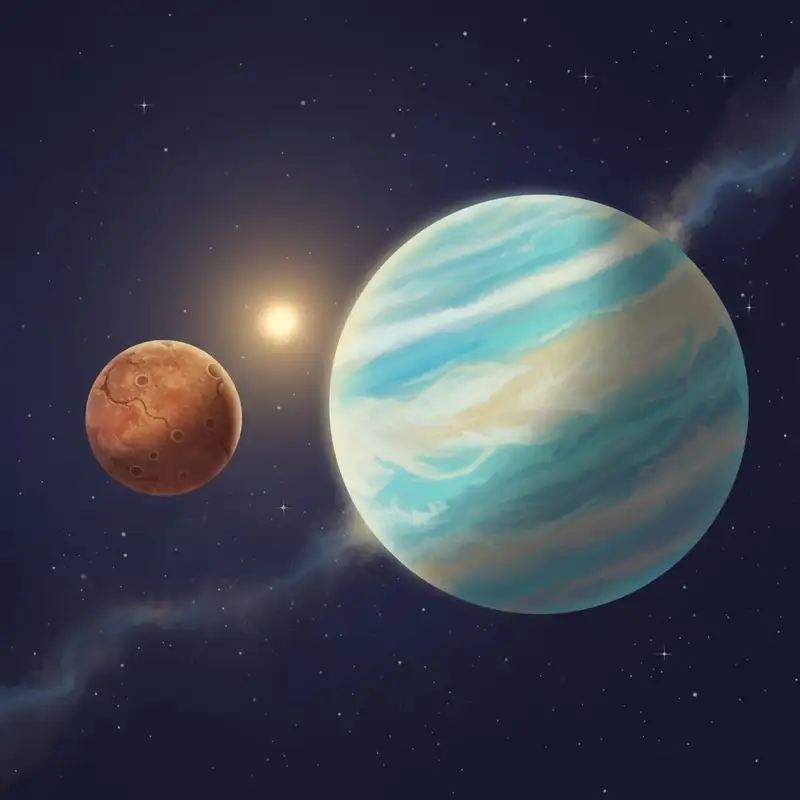
As you settle in, we begin near the warm glow of the Sun, drifting past the rocky inner planets — Mercury, Venus, Earth, and Mars — worlds shaped by heat, metal, and stone. From there, we glide outward through the asteroid belt and into the realm of the giant planets, where Jupiter and Saturn swirl with clouds of hydrogen and helium, and the distant ice giants, Uranus and Neptune, rest in the cold outskirts of the solar system.
Along the way, we explore the early days of our cosmic neighborhood, when the Sun was surrounded by a vast disk of gas and dust. In this slow and calming explanation, you’ll learn how temperature, distance, gravity, and time quietly determined the fate of each planet — deciding which worlds became rocky and solid, and which grew massive atmospheres of gas.
We’ll also reflect on planets beyond our solar system, the surprising diversity of exoplanets, and what these distant worlds reveal about how planets form throughout the universe. With soft imagery, unhurried pacing, and a focus on wonder rather than complexity, this episode is designed to help you relax, unwind, and drift gently into sleep.
Let the stars guide your thoughts as you float through space, listening to the story of worlds shaped by fire, gas, ice, and time.
🌌 Perfect for bedtime listening, relaxation, and quiet curiosity.